
RICH DECOR IDEAS
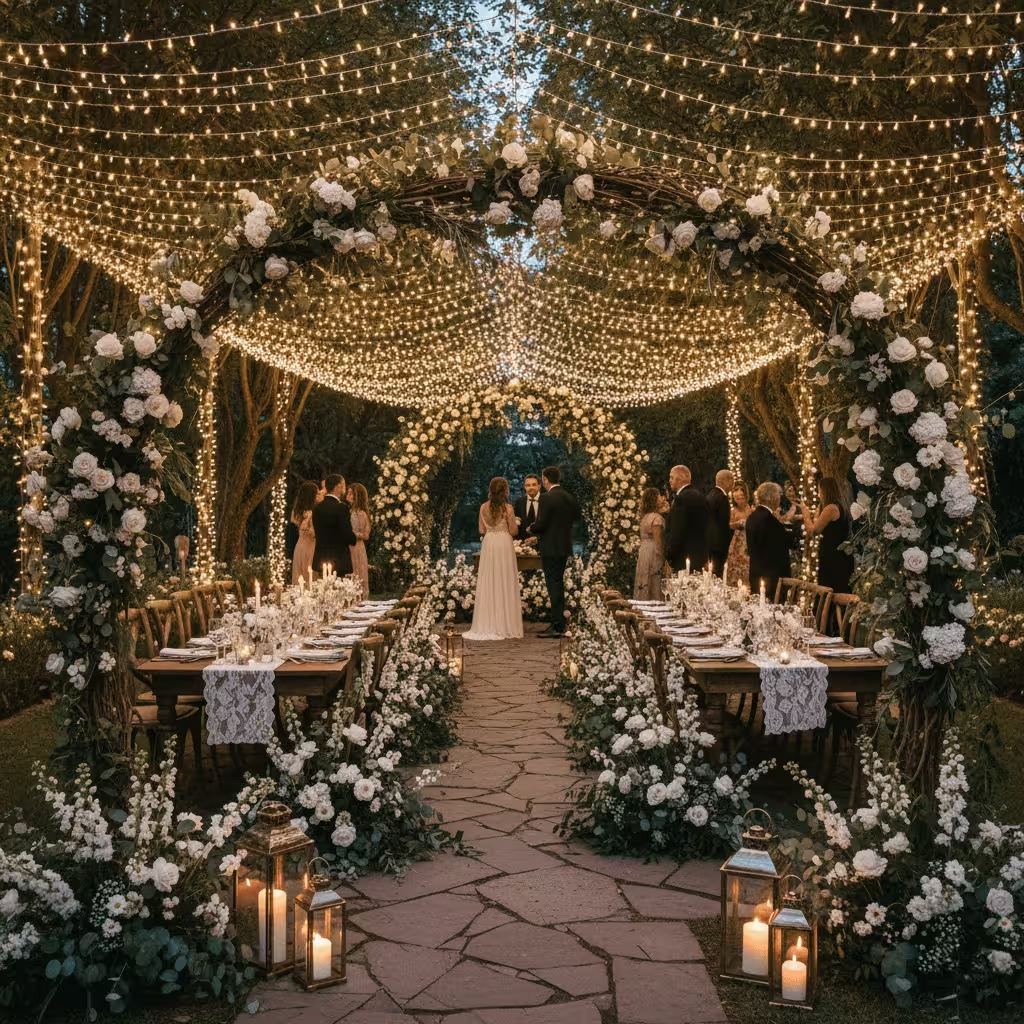
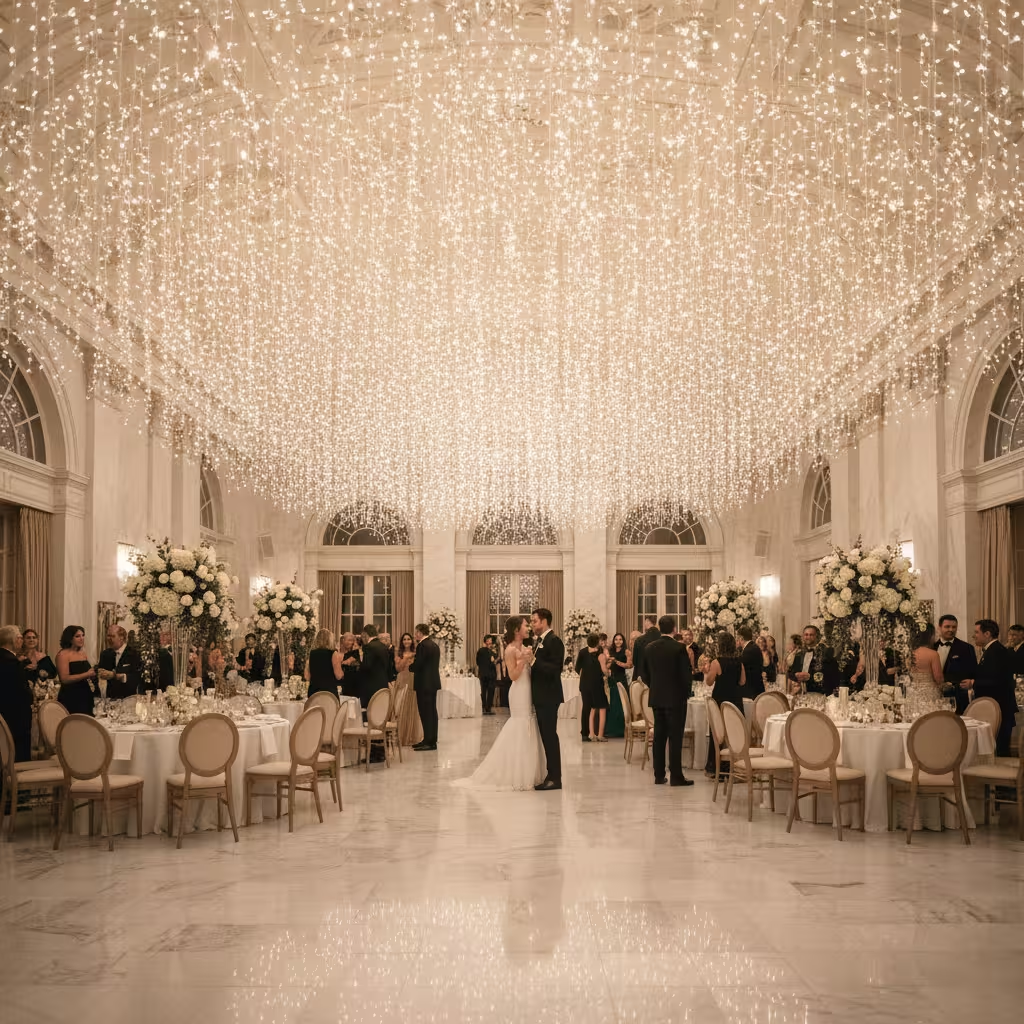
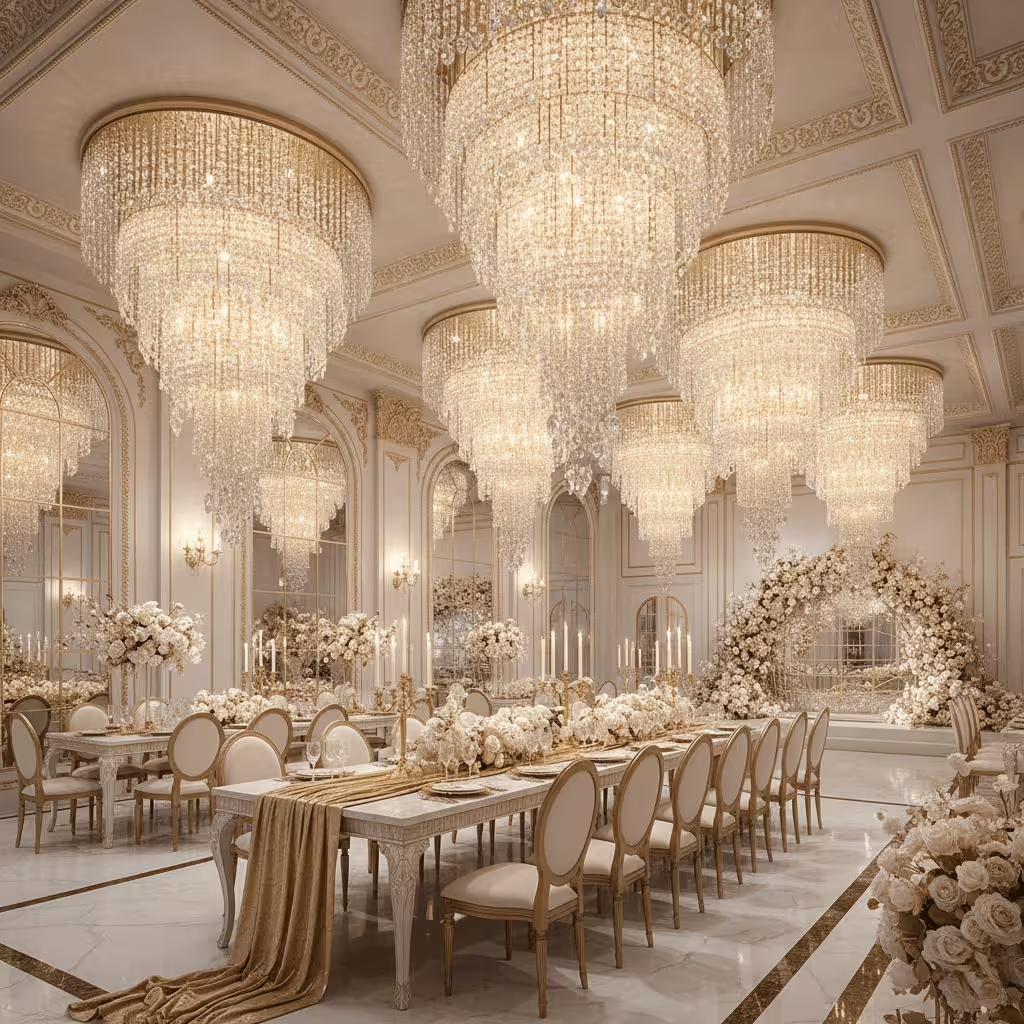

Rich Decor Secrets: How Luxury Homes Are Really Styled
A practical, unglamorous truth: the homes that read as “rich” rarely got there through spending alone. They got there through a repeatable design language — color, texture, scale, and restraint — that anyone can learn and apply.
What Is Rich Decor, Really?
Rich decor is not a single style you can buy off a shelf. It is a design approach built on a handful of repeatable habits: a disciplined color story, tactile materials that feel good under the hand, furniture chosen for proportion rather than trend, and just enough negative space to let each piece breathe. Homes that feel expensive almost always share this quiet consistency, whether the style leans traditional, transitional, or modern.
The opposite of rich decor is not “cheap” — it is “scattered.” A room filled with expensive items that don’t relate to one another will still read as disorganized. A room built around a clear palette and a handful of intentional choices can feel luxurious even on a modest budget.
The Color Palette Behind Rich Decor
Color does more heavy lifting in rich decor than almost any other element. The formula that shows up again and again in high-end interiors is simple: a calm, neutral base paired with one or two saturated accent tones.
Deep, Saturated Anchors
Instead of scattering color across every surface, rich-feeling rooms tend to commit to one deep, confident hue — emerald, ink navy, chocolate brown, or aubergine — and let it anchor a wall, a sofa, or a set of cabinets. That single commitment reads as intentional in a way that five competing pastel accents never do.
Warm Metallics as Accents
Brass, aged bronze, and warm gold hardware show up constantly in higher-end spaces because they catch light without shouting for attention. Cooler chrome finishes can work too, but warmer metals tend to make a room feel collected over time rather than freshly unboxed.
Materials and Textures That Signal Luxury
Texture is where the eye and the hand agree on whether something feels expensive. Rich decor leans on natural, tactile materials and layers them so no single surface dominates the room.
Natural Over Synthetic
Solid wood, stone, linen, wool, and leather age with character, while many synthetic finishes tend to look dated the moment a trend passes. Swapping a laminate tabletop for wood veneer, or a polyester throw for a wool one, changes how a room feels far more than its price tag suggests.
Layering for Depth
A single rug, a single throw, and a single lamp will always look thinner than a room where a textured rug sits under a smooth leather chair, next to a nubby wool throw, under a warm ceramic lamp base. Layering different textures in the same tonal family is one of the fastest ways to add visual depth without adding clutter.
Furniture Choices That Make a Room Feel Rich
Scale and proportion matter more than brand names. A single well-proportioned sofa in a durable fabric will outperform three mismatched budget pieces every time. Rich-feeling rooms typically favor a smaller number of larger, more considered pieces over many small, disconnected ones.
Mixing old and new is another quiet signal. A single vintage or antique find — a side table, a mirror, a chair — placed next to contemporary furniture suggests a home built over time rather than purchased in one trip. Matching furniture sets, by contrast, tend to read as a showroom rather than a lived-in space.
Lighting: The Most Underrated Rich Decor Tool
Lighting shapes the mood of a room more than almost any other decision, yet it is often the last thing addressed. A single overhead fixture flattens a space; layered lighting builds it.
A workable formula: one ambient source (overhead or a large statement fixture), one task source (a reading lamp or under-cabinet lighting), and one accent source (a picture light, candles, or a dimmable sconce). Warm-toned bulbs, generally in the 2700K to 3000K range, tend to flatter skin, wood, and fabric far better than cool white light.
Styling Details the Rich Never Skip
Curated, Not Cluttered
Rich decor favors a small number of meaningful objects over a shelf packed with knickknacks. A single striking bowl, a stack of well-chosen books, or one piece of art with room around it will always outperform a crowded display.
The Power of Negative Space
Empty space is not wasted space — it is what allows the eye to rest and the good pieces to stand out. Leaving a wall partially bare, or a shelf half-full, often does more for a room’s perceived value than adding one more item ever could.
Room-by-Room Rich Decor Ideas
Living Room
Anchor the seating around a large rug that extends under the front legs of every piece, choose one deep accent color for pillows or a single upholstered chair, and add a substantial coffee table in wood or stone rather than glass and metal alone.
Bedroom
Invest first in bedding weight and fabric — a heavier, well-made duvet reads as luxury faster than any headboard. Layer a low-pile rug, add a bench or reading chair at the foot of the bed, and keep nightstand surfaces nearly empty.
Kitchen and Dining
Swap visible plastic items — dish racks, trash bins, utensil holders — for wood, ceramic, or metal versions. In the dining space, a single statement pendant light over the table does more for perceived value than any tablecloth.
How to Get Rich Decor on Any Budget
Splurge Strategically
Rather than spreading a budget evenly, put more money into the one or two items a room is built around — usually the sofa, the bed, or a rug — and save on smaller accessories that are easy to swap out later.
Thrift and Vintage Finds
Secondhand shops, estate sales, and online marketplaces are consistently where the most interesting, well-made pieces show up at a fraction of retail cost. A single vintage brass lamp or an old wood side table often adds more character than a brand-new equivalent.
Common Rich Decor Mistakes to Avoid
- Buying matching furniture sets instead of mixing pieces from different sources and eras.
- Choosing cool, overly bright lighting instead of warm, layered light sources.
- Filling every shelf and surface instead of leaving room for the eye to rest.
- Chasing trends with cheap, obviously synthetic materials that date quickly.
- Skipping window treatments, which are one of the most overlooked value-add details in a room.
Frequently Asked Questions About Rich Decor
Is rich decor the same as maximalism?
Not quite. Maximalism is about abundance and pattern layered deliberately, while rich decor is more often about restraint — fewer, better pieces, arranged with intention. The two can overlap, but rich decor does not require more items, just more considered ones.
Can rich decor work in a small apartment?
Yes. Scale matters more than square footage. A small space with one well-chosen sofa, a considered color palette, and warm lighting will feel far richer than a large space filled with mismatched, budget furniture.
What is the fastest way to make a room feel more expensive?
Change the lighting. Swapping cool white bulbs for warm-toned ones, adding a dimmer, and layering in one accent lamp is usually the single highest-impact, lowest-cost change available in any room.
Final Thoughts on Building a Rich Decor Home
Rich decor is less about how much a home costs and more about how deliberately it was put together. A grounded color palette, natural materials, considered lighting, and the discipline to leave some space empty will do more for a room than any single expensive purchase. Start with one room, apply these habits consistently, and let the rest of the home follow the same quiet logic over time.